
KYPHOPLASTY
Treatment for Painful Vertebral Compression Fractures
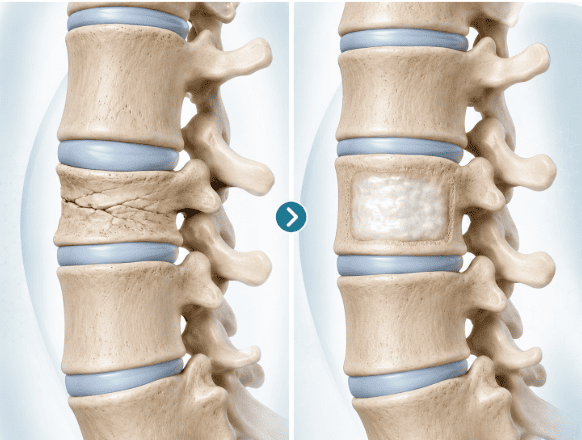
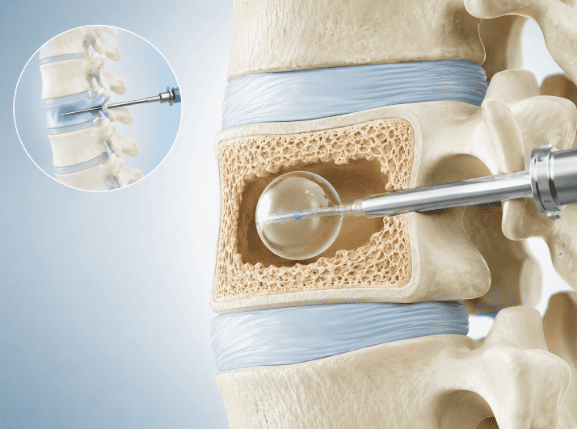
Kyphoplasty is a minimally invasive spine procedure used to treat painful vertebral compression fractures, commonly caused by osteoporosis, spinal tumors, or weakened bones. In this advanced image-guided treatment, the surgeon places a thin needle into the fractured vertebra through a very small skin puncture. A tiny balloon is then gently inflated to create space and may help restore vertebral height. Medical-grade bone cement is inserted into the cavity to stabilize the bone and reduce pain.
With modern fluoroscopy or CT-guided precision, kyphoplasty is performed with minimal tissue damage, smaller wounds, faster recovery, and improved spinal stability. It may help patients stand, walk, and return to daily activities sooner. However, kyphoplasty is not suitable for every back pain condition, especially disc problems, spinal stenosis, or fractures with nerve compression. A spine specialist evaluation is essential to decide the safest treatment plan.

FAQs
Patients with painful vertebral compression fractures due to osteoporosis, cancer-related bone weakness, or selected spinal fractures may benefit.
No. It is minimally invasive and done through small punctures, usually under image guidance.
The bone cement stabilizes the collapsed vertebra, reducing painful movement at the fracture site.
Usually no. Disc herniation, stenosis, or nerve compression need different treatment planning.
Possible risks include infection, bleeding, increased pain, nerve irritation, cement leakage, or rare allergic reactions.