
RENAL ARTERY STENTING
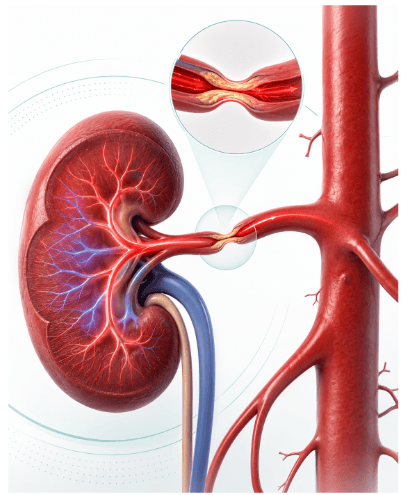
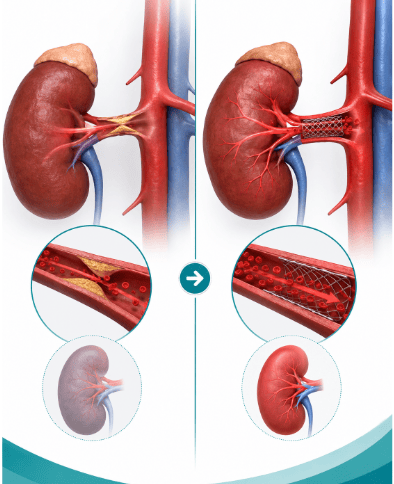
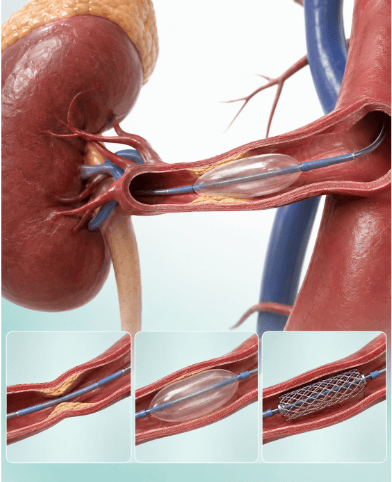
Renal artery stenting is a minimally invasive endovascular treatment used when narrowing of the kidney artery reduces blood flow and causes difficult-to-control blood pressure, known as renovascular hypertension. In this procedure, a thin catheter is guided through a blood vessel to the narrowed renal artery. A balloon is used to open the blockage, and a small metal stent is placed to keep the artery open and restore smoother blood flow to the kidney. Modern imaging such as Duplex Ultrasound, CTA, MRA, and digital subtraction angiography helps doctors identify the exact location and severity of narrowing. In selected cases, advanced catheter-based techniques and high-precision imaging may improve treatment planning and safety. Renal artery stenting may help protect kidney function, improve blood pressure control, and reduce the risk of complications when lifestyle changes and medicines are not enough. Regular follow-up is important to monitor stent function and kidney health.
Treatment
Renal artery stenting is performed through a small puncture, usually in the groin or wrist. A catheter is guided to the renal artery, the narrowed segment is widened with balloon angioplasty, and a stent is placed to support the artery from inside. Patients may need blood-thinning medicines after the procedure and follow-up scans to check blood flow and detect any re-narrowing.
FAQs
Patients with severe renal artery narrowing, resistant high blood pressure, worsening kidney function, or recurrent fluid overload may be evaluated for stenting.
No. It is a minimally invasive catheter-based procedure with a smaller incision and faster recovery than open surgery.
Doctors may advise Duplex Ultrasound, CTA, MRA, kidney function tests, or renal angiography depending on the patient’s condition.
Regular follow-up, medicines, blood pressure monitoring, and imaging are important to ensure the artery remains open.