
Non-Invasive Angiogram
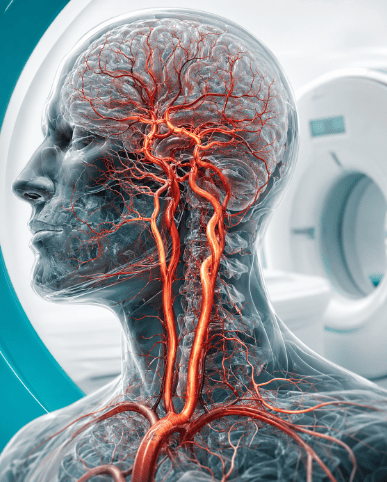
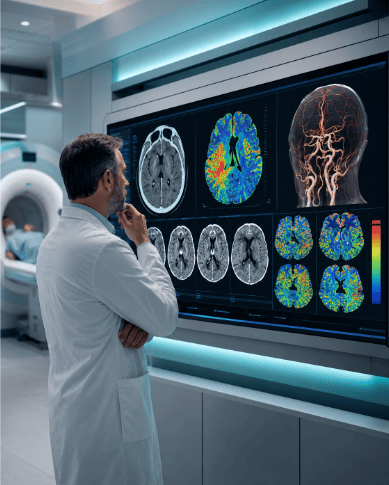
CT Angiography (CTA), CT Perfusion (CTP), MRI Diffusion and MRI Perfusion are advanced imaging techniques used to evaluate brain and neck blood vessels with speed and precision. CTA helps detect aneurysms, carotid or vertebral artery narrowing, dissection, vascular malformations, venous occlusion and stroke-causing vessel blockage. CT Perfusion adds functional information by showing how blood is flowing through brain tissue, helping identify areas that may still be saved during acute stroke treatment. MRI Diffusion can detect very early stroke-related brain injury, while MRI Perfusion helps assess reduced blood supply and tissue at risk. Today, high-resolution scanners, thin-slice imaging, 3D vascular reconstruction and advanced perfusion software allow faster diagnosis and better treatment planning. In emergency stroke care, these scans help decide whether patients may benefit from thrombolysis, thrombectomy, thromboaspiration or other neurointerventional procedures. CTA with CTP or MRA with diffusion MRI is recommended for selected thrombectomy candidates.

Treatment / Clinical Use
Based on the imaging findings, treatment may include emergency stroke medication, intra-arterial thrombolysis, mechanical thrombectomy, thromboaspiration, carotid or vertebral artery treatment, aneurysm embolization, venous sinus intervention, or close neurological monitoring. CT Perfusion is especially useful in acute ischemic stroke because it helps differentiate the infarct core from potentially salvageable brain tissue, often called the penumbra.
FAQs
CTA is used to study blood vessels in the brain and neck. It helps detect aneurysms, stroke-related vessel blockages, narrowing, dissection and vascular malformations.
CT Perfusion shows how blood flows through brain tissue. In stroke cases, it helps doctors understand which brain areas are already damaged and which may still be saved.
MRI Diffusion is highly sensitive for detecting early ischemic stroke and helps identify areas where brain cells are affected by reduced blood supply.
Yes. CTA, CTP, MRI Diffusion and MRI Perfusion help doctors plan procedures such as thrombectomy, thromboaspiration, aneurysm embolization and other endovascular treatments.