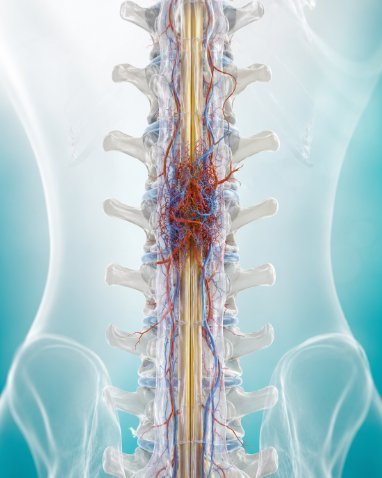
Spinal Dural AVM/AVF is an abnormal connection between arteries and veins around the spinal cord. Because these vessels bypass the normal tiny capillaries, blood flows under high pressure into spinal veins. Over time, this may reduce normal spinal cord drainage and cause leg weakness, numbness, back pain, walking difficulty, or bowel and bladder problems. MRI/MRA with contrast can suggest the diagnosis, while spinal angiography is the gold-standard test to map the exact abnormal vessel before treatment.
Treatment
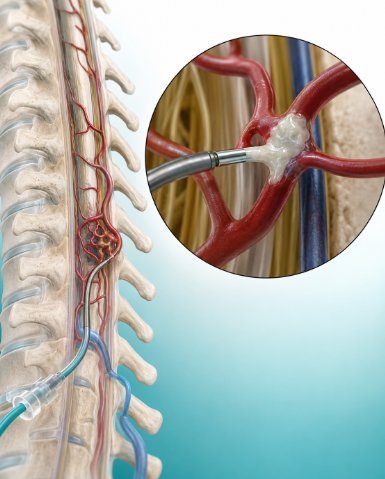
Treatment is planned according to the type, location, blood supply, and spinal cord involvement. Advanced endovascular embolization uses ultra-thin microcatheters guided through blood vessels under angiography. New-generation liquid embolic agents such as Onyx, Squid, or medical glue may be used to seal the abnormal connection with high precision. Some patients may need microsurgery, and complex cases may require a combined approach. The goal is to protect spinal cord function, prevent bleeding, and reduce further neurological worsening.
FAQs
Can spinal AVF cause paralysis?
Yes, if untreated, progressive spinal cord damage may lead to severe weakness or paralysis.
Is embolization open surgery?
No. It is minimally invasive and done through a catheter.
Is spinal angiography necessary?
Yes, it helps confirm the diagnosis and plan safe treatment.